
Quick answer
Sanitary pad quality control involves evaluating raw materials, absorbency performance, leakage resistance, product dimensions, hygiene controls, packaging integrity, and production consistency. Before placing a bulk order, B2B buyers should request product specifications, relevant test reports, production samples, and documented quality inspection procedures. A structured supplier evaluation process helps importers, distributors, and private label brands reduce sourcing risks and maintain consistent product quality.
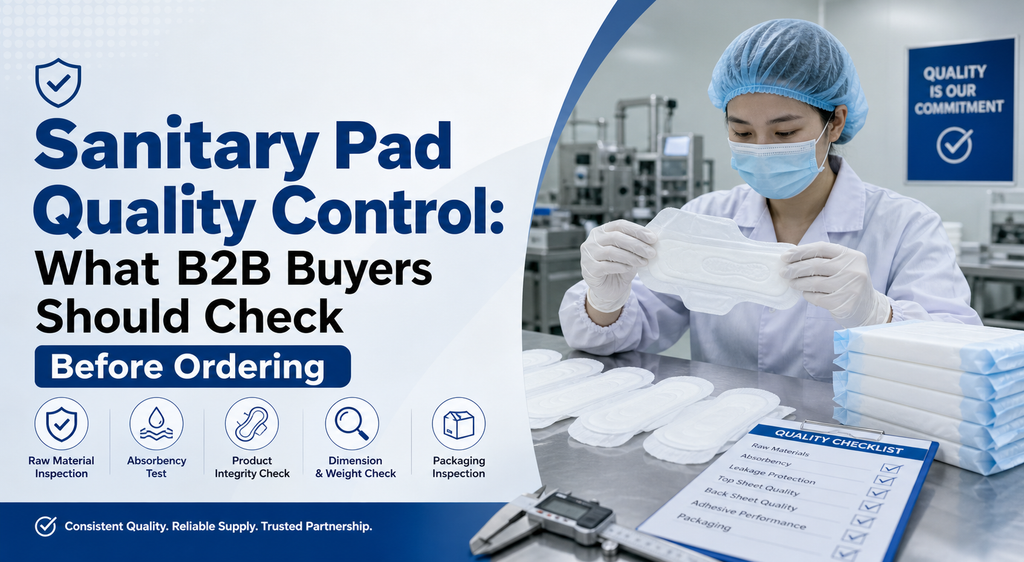
When sourcing sanitary pads for your brand, product quality is a critical factor affecting consumer satisfaction, brand reputation, and long-term business success.
Unlike ordinary consumer products, sanitary pads are designed for intimate use. Consumers expect reliable absorption, leakage protection, comfort, and safety. Quality issues such as poor absorbency, adhesive failure, or inconsistent product dimensions can lead to complaints and damage brand credibility.
For B2B buyers, sanitary pad quality control goes beyond checking finished products. It involves evaluating raw materials, product performance, manufacturing hygiene, safety testing, and production consistency.
So, what should you check before placing a bulk order?
This guide covers the essential quality control factors that brands, importers, wholesalers, and distributors should consider when choosing a reliable sanitary pad manufacturer.
1. Check Sanitary Pad Raw Material Quality
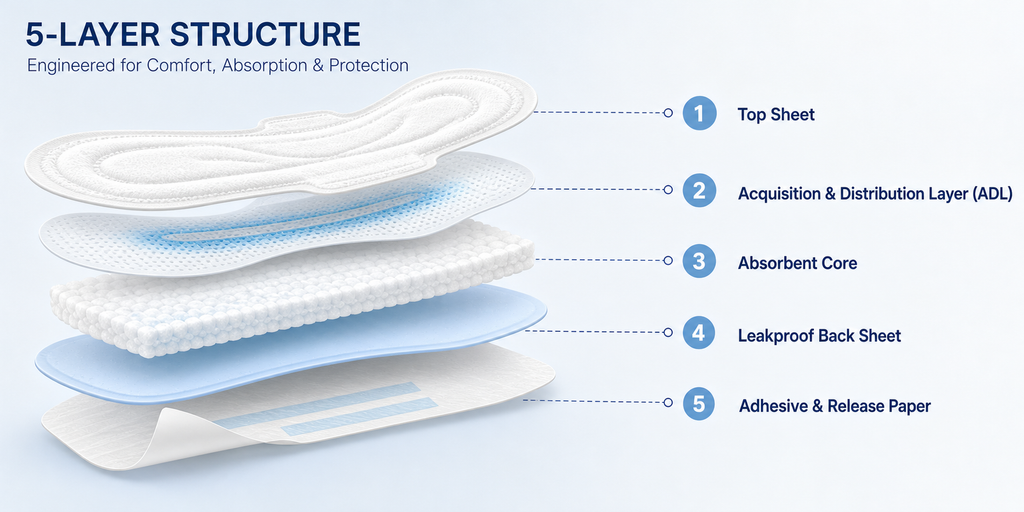
Raw materials directly influence a sanitary pad’s comfort, absorbency, breathability, and leakage protection.
A professional manufacturer should have established procedures to inspect incoming materials and verify their compliance with agreed specifications.
Top Sheet: Comfort and Liquid Transfer
The top sheet comes into direct contact with the skin. Common materials include nonwoven fabrics, perforated films, and cotton-based materials.
Buyers should evaluate softness, liquid penetration, surface dryness, and material consistency.
Absorbent Core: Absorption and Retention
The absorbent core may contain fluff pulp, superabsorbent polymer (SAP), absorbent paper, or other functional materials.
Check whether the core provides sufficient absorption and retains liquid effectively under pressure. Uneven material distribution can affect product performance.
Back Sheet: Leakage Protection
The back sheet helps prevent liquid from passing through the bottom of the pad.
Buyers should check the integrity and leakage resistance of polyethylene films, breathable composite films, or other barrier materials.
Adhesive Quality
Adhesives should securely position the sanitary pad without leaving excessive residue or damaging underwear.
B2B Tip: Request raw material specifications and available test reports before confirming your product design.
2. Evaluate Absorption Performance
Absorption performance is one of the most important indicators of sanitary pad quality.
However, high absorption capacity alone does not guarantee reliable protection. A quality sanitary pad should balance absorption speed, liquid retention, and surface dryness.
Key Performance Indicators
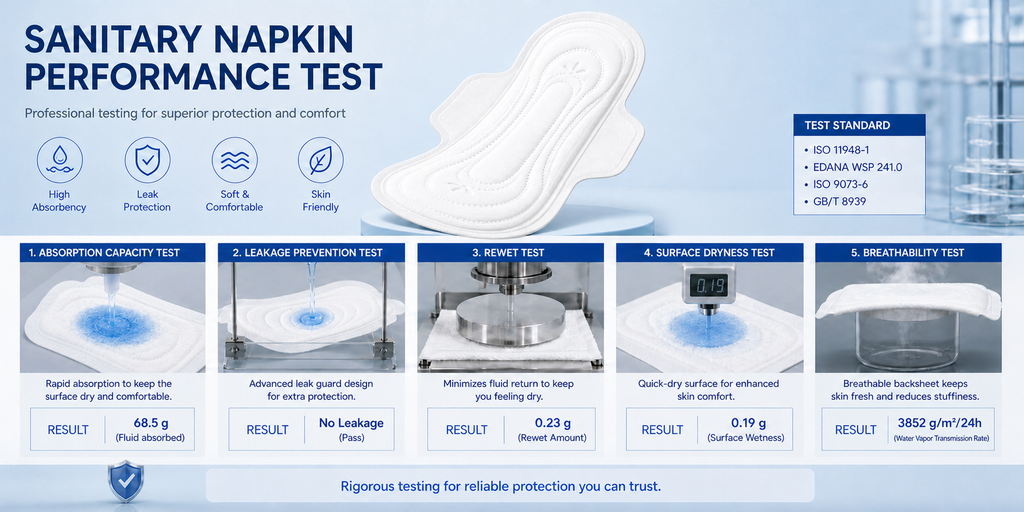
Absorption Capacity: Measures how much liquid a pad absorbs under specified testing conditions. Daytime and overnight sanitary pads may require different capacities.
Absorption Speed: Evaluates how quickly liquid moves into the absorbent core. Faster absorption helps reduce liquid accumulation on the surface.
Rewet Performance: Measures how much absorbed liquid returns to the surface under pressure. Lower rewet values generally indicate better surface dryness.
Liquid Retention: Evaluates how effectively the absorbent core holds liquid when pressure is applied.
Why Testing Methods Matter
Absorption results can vary depending on the test liquid, applied volume, pressure, and testing procedures.
When comparing suppliers, buyers should request available sanitary pad absorbency test reports and ensure that products are evaluated under comparable conditions.
3. Inspect Leakage Protection and Product Construction
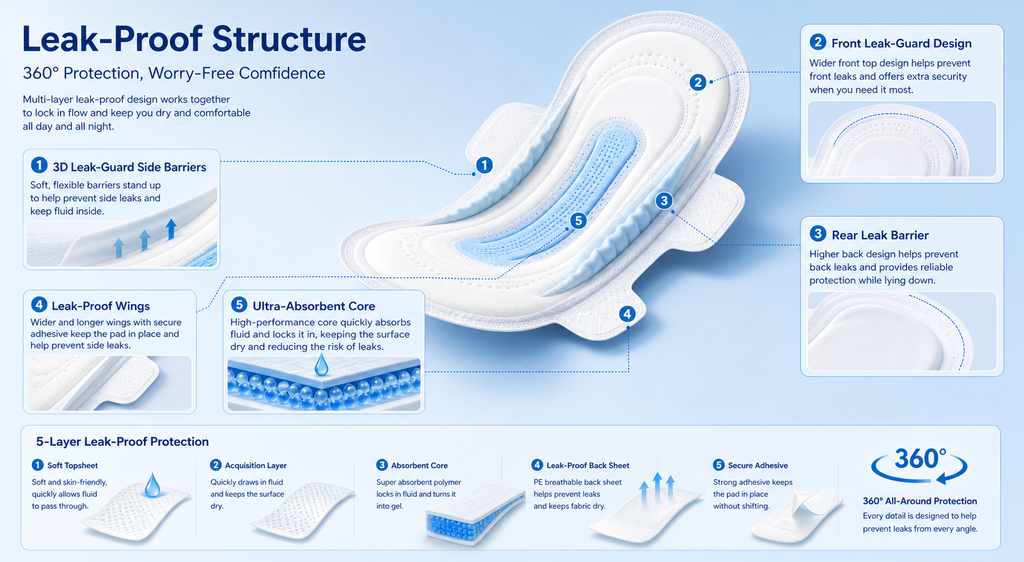
Effective leakage protection depends on both absorbent materials and product structure.
Even a highly absorbent sanitary pad may leak if its core distribution, dimensions, or protective features are poorly designed.
Important Features to Check
Absorbent Core Distribution: Materials should be evenly positioned according to the product design.
Leakage Protection Channels: Embossed channels may help manage liquid distribution.
Wings and Side Structures: Check their dimensions, positioning, and adhesive strength.
Product Dimensions: Length, width, and thickness should match the intended product category.
Core Stability: The absorbent core should maintain its structure during handling and use.
When evaluating samples, compare multiple pads for consistency in thickness, wing alignment, core positioning, and edge sealing.
B2B Tip: Always inspect several samples rather than relying on a single product.
4. Review Manufacturing Hygiene and Factory Conditions
Because sanitary pads are intimate hygiene products, manufacturing cleanliness is essential.
A reliable sanitary pad factory should maintain appropriate hygiene management throughout production, storage, and packaging.
What Should Buyers Evaluate?
Production Environment: Manufacturing areas should maintain suitable cleanliness and hygiene conditions.
Personnel Hygiene: Employees should follow established hygiene procedures.
Equipment Maintenance: Production equipment should undergo regular cleaning and maintenance.
Material Storage: Raw materials should be protected from moisture, dust, and contamination.
Finished Product Handling: Completed sanitary pads should be stored and transported appropriately.
Dailys Manufacturing Capabilities
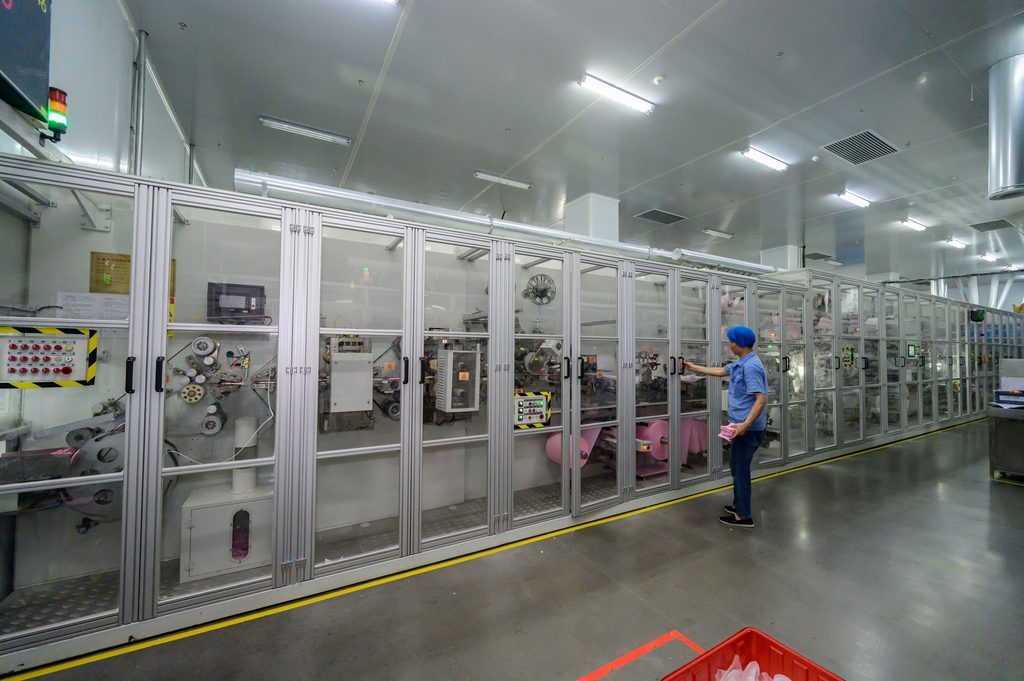
Changzhou Dailys Care Products Co., Ltd. operates a 35,000 m² medical-standard production facility and office area in China.
Our manufacturing infrastructure includes:
20 fully automatic production lines for disposable hygiene products
15 fully automatic production lines for textile products
2 R&D centers
A professional international trade team
With over 20 years of hygiene industry experience, Dailys combines manufacturing expertise, product development, and quality control capabilities to support international customers.
5. Verify Product Safety and Compliance
Sanitary pad safety requirements vary across international markets. Before ordering, buyers should confirm the regulations and testing requirements applicable to their destination countries.
Important Safety Considerations
Chemical Safety: Materials should comply with applicable restrictions on relevant chemical substances.
Microbiological Quality: Microbiological testing may be necessary to evaluate finished product hygiene.
Skin Compatibility: Products should use appropriate materials, while claims such as “hypoallergenic” require supporting evidence.
Fragrances and Additives: Additional ingredients should be evaluated for safety and applicable labeling requirements.
Documents Buyers Should Request
Depending on market requirements, relevant documentation may include:
Raw material specifications
Available product testing reports
Quality management documentation
Product composition information
Applicable compliance documents
Always verify the validity and scope of certificates or test reports.
Important: Claims such as “chemical-free,” “antibacterial,” or “medical-grade” should not be used without appropriate substantiation.
6. Examine Production Quality Control and Batch Consistency
Producing a satisfactory sample is only the beginning. Manufacturers must also maintain consistent quality during mass production.
Effective sanitary pad quality control should cover three key stages.
Incoming Quality Control (IQC)
Raw materials are inspected before production to verify their appearance, dimensions, weight, and relevant functional properties.
In-Process Quality Control (IPQC)
Production inspections help identify problems before they affect large quantities of products.
Typical inspection items include product dimensions, pad weight, absorbent core positioning, adhesive application, wing alignment, and edge sealing.
Finished Product Quality Control (FQC)
Finished products are checked against approved specifications, including appearance, dimensions, performance, and packaging.
Batch Traceability
A reliable manufacturer should maintain appropriate production records, including material batches, production dates, and inspection results.
Traceability helps identify affected products and investigate quality issues.
B2B Tip: Ask suppliers how they handle nonconforming products, customer complaints, and corrective actions.
7. Check Packaging and Labeling Quality
Packaging protects sanitary pads during storage, transportation, and distribution while supporting brand presentation.
Before approving an order, buyers should verify:
Packaging Integrity: Individual wrappers and retail packs should be properly sealed.
Print Quality: Logos, colors, and product information should match approved designs.
Pack Quantity: The number of pads per package should meet specifications.
Carton Strength: Shipping cartons should withstand normal transportation conditions.
Barcode Accuracy: Barcodes should be accurate and readable where required.
Labeling requirements vary by market and may include product names, quantities, manufacturer information, batch identification, and usage instructions.
Buyers should also confirm that any stated shelf life is supported by appropriate product information.
8. Confirm OEM/ODM Customization and Sample Approval
For private label sanitary pad brands, quality control begins during product development.
Before mass production, manufacturers and buyers should agree on detailed specifications and quality acceptance criteria.
Common OEM/ODM Customization Options
Product length, width, thickness, and shape
Top sheet materials
Absorbent core composition
Absorption performance
Wing design
Individual wrapping and retail packaging
Brand logos and labeling
Why Sample Approval Matters
Approved samples provide an important reference for mass production.
Before confirmation, evaluate product dimensions, materials, absorbency, leakage resistance, adhesive performance, and packaging.
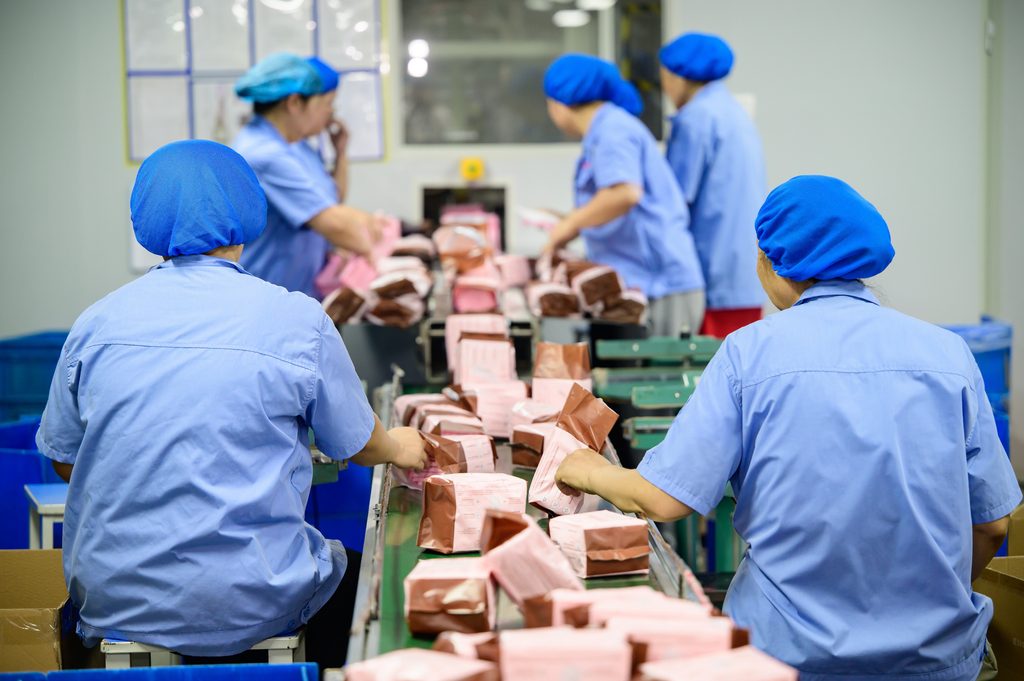
At Dailys, our OEM/ODM manufacturing services combine product development, material selection, sampling, manufacturing, and quality control.
Supported by two R&D centers, we help brands develop sanitary pad products tailored to their target markets.
9. Conduct a Supplier Quality Audit Before Ordering
Before placing a large order, buyers should evaluate the manufacturer’s overall reliability.
A supplier audit can help identify potential risks related to production capacity, quality management, and communication.
Key Questions to Ask
Does the manufacturer have experience producing feminine hygiene products?
Can the factory support your required order quantities?
Are raw materials and finished products inspected?
Can the supplier provide relevant test reports and product specifications?
How are quality problems investigated and corrected?
Can the manufacturer meet your target production schedule?
Depending on order size, buyers may conduct factory visits, virtual audits, or independent third-party inspections.
These evaluations provide additional assurance before establishing a long-term manufacturing partnership.
10. Sanitary Pad Quality Control Checklist for B2B Buyers
Before confirming your purchase order, use the following checklist to evaluate potential suppliers.
| Quality Control Area | What to Check |
| Raw Materials | Top sheet, absorbent core, back sheet, adhesives |
| Absorption Performance | Capacity, absorption speed, rewet, retention |
| Leakage Protection | Core distribution, wings, barrier integrity |
| Product Dimensions | Length, width, thickness, weight |
| Manufacturing Hygiene | Production environment, cleaning, storage |
| Product Safety | Relevant testing and market compliance |
| Process Control | Incoming, in-process, and final inspections |
| Batch Consistency | Production records and traceability |
| Packaging | Sealing, printing, quantity, carton quality |
| OEM/ODM Samples | Approved specifications and performance |
| Supplier Reliability | Experience, capacity, communication |
A clear checklist helps buyers compare manufacturers objectively and reduce sourcing risks.
Why Choose Dailys as Your Sanitary Pad Manufacturer?
Finding a reliable manufacturing partner requires more than competitive pricing. Product development capabilities, manufacturing infrastructure, and quality management are equally important.
Changzhou Dailys Care Products Co., Ltd. is a professional hygiene products manufacturer in China, serving brands, retailers, importers, and distributors worldwide.
Our Manufacturing Advantages
20+ Years of Industry Experience
Extensive experience in feminine, maternal, and personal hygiene product manufacturing.
35,000 m² Manufacturing Facility
A medical-standard production facility and office area supporting manufacturing operations and quality management.
20 Fully Automatic Disposable Hygiene Production Lines
Established production infrastructure supporting disposable hygiene product manufacturing.
2 R&D Centers
Dedicated resources for product development, material selection, and customization.
OEM/ODM Manufacturing Services
Integrated support covering product development, sampling, manufacturing, and quality control.
Professional International Trade Team
Customer-focused communication and coordination throughout the manufacturing process.
At Dailys, we follow the principles of quality first, customer focus, and integrity, helping customers develop hygiene products that meet their brand requirements.
Frequently Asked Questions
1. What Are the Most Important Sanitary Pad Quality Tests?
Important tests include absorption capacity, absorption speed, rewet performance, leakage resistance, adhesive performance, and relevant safety testing.
Specific requirements depend on the product and destination market.
2. How Can Buyers Verify Sanitary Pad Quality Before Ordering?
Request product samples, review specifications and available testing reports, and evaluate the manufacturer’s quality control procedures.
For larger orders, consider factory audits or third-party inspections.
3. What Should I Check When Inspecting Sanitary Pad Samples?
Evaluate material softness, absorbency, product dimensions, leakage protection, adhesive performance, and packaging quality.
Compare multiple samples against approved specifications.
4. Can Dailys Manufacture Private Label Sanitary Pads?
Yes. Dailys provides OEM/ODM manufacturing services, supporting product development, material selection, customization, sampling, and production.
Customers can contact our team to discuss product specifications, packaging requirements, and estimated order quantities.
Conclusion: Choose Quality Before Placing Your Order
Reliable sanitary pad sourcing requires more than comparing prices.
From raw material selection and absorption testing to manufacturing hygiene, packaging, and batch consistency, sanitary pad quality control should be evaluated throughout the manufacturing process.
Looking for a reliable sanitary pad manufacturer in China?
Contact Dailys to discuss your product specifications, customization requirements, and bulk order needs.
Frequently Asked Questions
What is sanitary pad quality control?
Sanitary pad quality control is the process of inspecting and evaluating raw materials, manufacturing procedures, product performance, hygiene conditions, and finished packaging. It helps determine whether sanitary pads meet defined specifications and applicable quality requirements before delivery to buyers.
What should B2B buyers check before ordering sanitary pads?
B2B buyers should check raw material specifications, absorption performance, product dimensions, leakage-related performance, manufacturing hygiene, packaging requirements, and supplier quality control procedures. They should also request representative samples and relevant quality documentation before confirming bulk orders.
How is sanitary pad absorbency tested?
Sanitary pad absorbency may be evaluated through tests measuring liquid absorption capacity, absorption speed, liquid retention, and rewet performance. Results depend on the test methods and conditions used, so buyers should request documented procedures and compare products using equivalent testing criteria.
How can buyers evaluate a sanitary pad supplier?
Buyers can evaluate sanitary pad suppliers by reviewing product specifications, sample quality, available test reports, manufacturing hygiene practices, quality inspection procedures, and packaging capabilities. Factory assessments and independent inspections may provide additional information when appropriate.