Quick answer
Starting a private label sanitary pads brand involves choosing your target market, selecting the right sanitary pad products, finding a reliable OEM/ODM manufacturer, and developing customized packaging and branding. Before launching, confirm product specifications, material safety, applicable regulatory requirements, minimum order quantities (MOQs), sample approval, pricing, and quality control. Working with an experienced feminine care manufacturer can help brands, importers, and distributors develop products for their target markets.
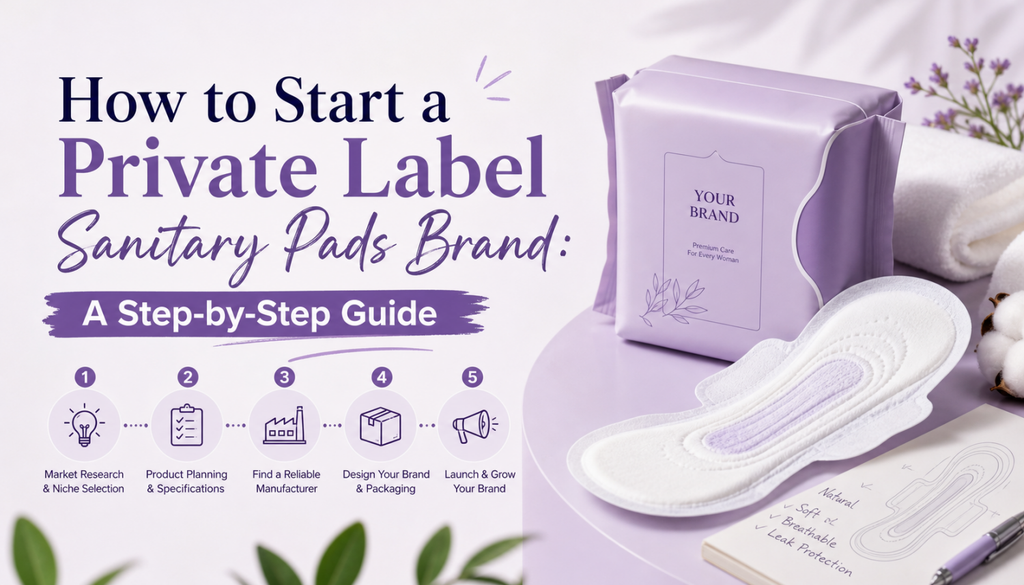
Starting a private label sanitary pads brand is an opportunity for businesses looking to enter or expand within the feminine hygiene market. As consumers become more attentive to menstrual comfort, product quality, absorbency, and personal preferences, brands have opportunities to develop sanitary pad collections tailored to specific customer needs.
However, launching a successful sanitary pad brand involves more than choosing a product and adding your logo. From understanding your target market and selecting materials to evaluating manufacturing partners and developing packaging, each decision can influence product performance, costs, and customer satisfaction.
Working with an experienced private label sanitary pads manufacturer can help simplify this process. Instead of investing in your own manufacturing facilities, you can leverage an OEM/ODM manufacturer’s production capabilities, product development expertise, and quality control systems.
In this guide, we’ll walk through the essential steps to starting a private label sanitary pads brand, including product planning, manufacturer selection, customization, sampling, and mass production.
What Are Private Label Sanitary Pads?
Private label sanitary pads are menstrual hygiene products manufactured by a third-party factory and sold under a brand’s own name, logo, and packaging.
Under this business model, brands work with a sanitary pads OEM manufacturer to develop products that meet their target market’s requirements.
Depending on the manufacturer’s capabilities and project specifications, private label customization may include:
Product sizes, shapes, and thicknesses
Topsheet materials and surface textures
Absorbent core structures and absorbency levels
Winged or wingless designs
Day-use and overnight sanitary pads
Individual wrappers and retail packaging
Brand logos, colors, and packaging artwork
For example, a feminine care brand may want to launch a premium ultra-thin sanitary pad collection featuring soft topsheets, different absorbency levels, and customized packaging.
Another brand may focus on affordable everyday sanitary pads designed for supermarkets or regional distribution markets.
Both businesses can use private label manufacturing to develop products that reflect their brand positioning without establishing their own production facilities.
OEM vs. ODM Sanitary Pads: What’s the Difference?
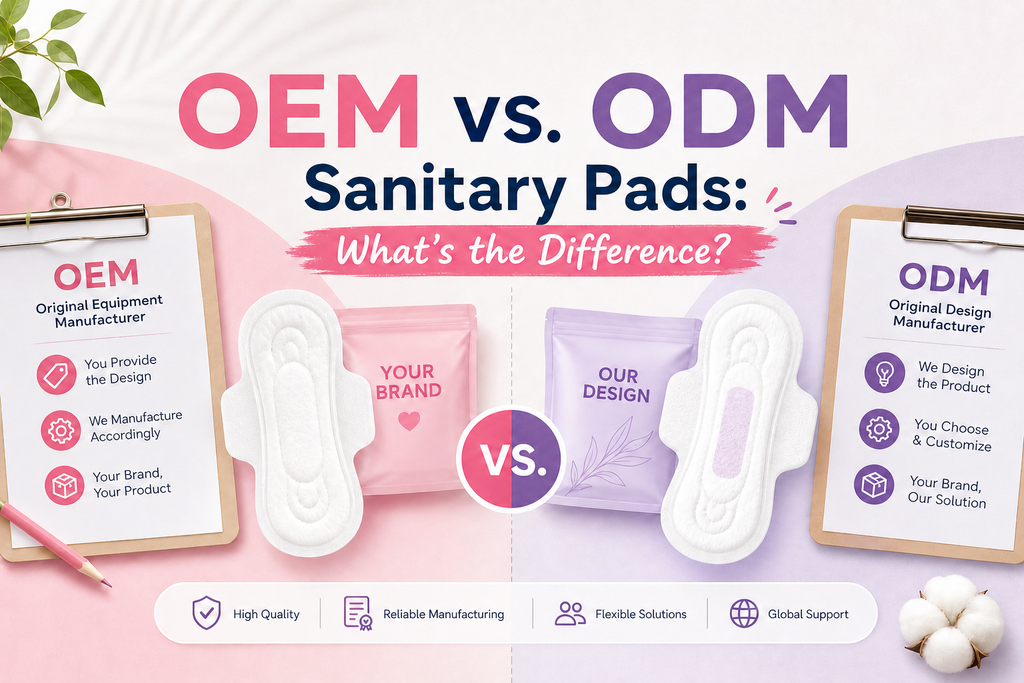
Before choosing a manufacturing partner, it’s important to understand two common manufacturing models.
OEM (Original Equipment Manufacturing)
Under an OEM arrangement, the manufacturer produces sanitary pads according to the brand’s confirmed product specifications.
The brand may provide requirements covering materials, dimensions, absorbency, product structure, and packaging.
OEM manufacturing is often suitable for brands that already have clear product specifications or established product designs.
ODM (Original Design Manufacturing)
Under an ODM arrangement, the manufacturer provides product development support based on the customer’s requirements.
This may involve selecting suitable materials, adjusting product structures, developing samples, and optimizing product specifications.
ODM services can be particularly useful for businesses launching a sanitary pad brand for the first time.
An experienced OEM/ODM sanitary pads manufacturer can help brands determine which development approach is appropriate for their project.
Step 1: Research Your Target Market
The first step in launching a private label sanitary pads brand is identifying your target customers and understanding their product preferences.
Sanitary pad requirements can vary between countries, sales channels, consumer groups, and price segments.
Before developing your product range, consider several important questions.
Who Are Your Target Customers?
Your customers might include:
Consumers looking for affordable everyday menstrual products
Women seeking ultra-thin sanitary pads
Customers who prefer soft and comfortable materials
Consumers requiring longer overnight protection
Retail shoppers comparing different absorbency options
Online shoppers interested in specialized feminine care brands
Understanding your target audience helps determine which product features to prioritize.
Which Market Will You Sell In?
Different markets may have different expectations regarding sanitary pad dimensions, product thickness, packaging quantities, labeling, and regulatory requirements.
For example, products developed for supermarket distribution may require different packaging configurations from those sold through e-commerce channels.
Before placing an order with a private label sanitary pads supplier, research:
Local consumer preferences
Competing sanitary pad brands
Common product sizes and absorbency levels
Retail price positioning
Packaging formats
Applicable product safety and labeling requirements
This information will serve as the foundation for your product development strategy.
Step 2: Choose Your Private Label Sanitary Pad Product Range
Once you understand your target market, the next step is selecting the sanitary pad products you want to offer.
A well-planned product range should address different menstrual flows, usage occasions, and consumer preferences.
Ultra-Thin Sanitary Pads
Ultra-thin sanitary pads are designed to provide menstrual protection with a relatively slim product structure.
They are often positioned around comfort, discretion, and everyday convenience.
For private label brands, customization options may include different topsheet materials, absorbent structures, lengths, and packaging designs.
Regular Sanitary Pads
Regular sanitary pads are commonly positioned for everyday menstrual protection.
Brands may develop different sizes and absorbency levels to accommodate their target customers.
Maxi or Thick Sanitary Pads
Maxi sanitary pads generally feature a thicker structure and may be developed for consumers who prefer additional absorbent material.
Actual absorbency depends on the complete product design rather than thickness alone.
Overnight Sanitary Pads
Overnight sanitary pads are typically designed with longer dimensions and coverage features intended to help manage leakage during sleep.
Depending on the design, brands may customize:
Product length
Rear coverage
Absorbent core structure
Wing design
Leakage protection features
Winged and Wingless Sanitary Pads
Winged sanitary pads include side extensions designed to help secure the product to underwear.
Wingless pads offer a different wearing configuration.
Both designs can be incorporated into a custom sanitary pads collection depending on consumer preferences.
Product Development Tip: For a new sanitary pad brand, starting with a focused selection of products may help simplify inventory management, packaging development, and initial market testing.
Step 3: Find a Reliable Private Label Sanitary Pads Manufacturer
Choosing the right manufacturing partner is one of the most important decisions when starting a sanitary pad brand.
A suitable private label sanitary pads manufacturer should be able to support your product requirements while maintaining consistent production and quality standards.
When evaluating potential manufacturers, consider the following factors.
Manufacturing Experience
Experience in feminine hygiene manufacturing can be valuable when developing products with specific absorbency, comfort, and structural requirements.
Manufacturers familiar with sanitary pad production can provide insights into material selection, production feasibility, and quality considerations.
Production Capacity
Evaluate whether the manufacturer has sufficient production capacity for your expected order volumes.
Ask about:
Available production lines
Manufacturing capabilities
Production scheduling
Order quantity requirements
Capacity for future order growth
A manufacturer should be able to explain how its production capabilities align with your product specifications and forecasted demand.
OEM/ODM Customization Capabilities
Not every sanitary pad supplier offers the same level of customization.
Some manufacturers primarily provide existing products with customized packaging, while others support more extensive product development.
If you want to create differentiated products, look for a manufacturer that can discuss materials, absorbent structures, sizes, functional features, and packaging options.
Quality Control
Quality control is particularly important for products used in intimate personal care.
Ask potential suppliers how they manage:
Raw material inspection
Production hygiene
In-process quality checks
Finished product inspection
Product testing
Packaging inspection
Batch traceability
Communication and Export Support
Clear communication is essential when coordinating specifications, packaging artwork, sample approval, manufacturing schedules, and international shipping.
Working with a manufacturer experienced in serving overseas customers can help reduce misunderstandings during the development and ordering process.
Why Consider a Sanitary Pad Manufacturer in China?
China has an established manufacturing supply chain for disposable hygiene products, including raw materials, converting equipment, packaging, and export logistics.
Working with a sanitary pad manufacturer in China may provide access to integrated OEM/ODM manufacturing and product customization services.
However, buyers should evaluate each supplier individually rather than assuming that all manufacturers offer the same capabilities or quality standards.
Partner with Dailys for Private Label Sanitary Pads
Changzhou Dailys Care Products Co., Ltd. is a professional hygiene products manufacturer in China with over 20 years of industry experience.
Dailys supports international feminine care brands, private label businesses, importers, distributors, and retailers with OEM/ODM manufacturing services.
Our manufacturing capabilities include:
Over 20 years of hygiene product industry experience
A 35,000 m² production facility and office area
20 fully automatic production lines for disposable hygiene products
Two R&D centers supporting product development
Product material and structural customization
Private label branding and packaging support
Quality management throughout manufacturing
An international trade team supporting overseas projects
From initial product specifications to sampling and mass production, Dailys works with customers to develop sanitary pad products suited to their target markets.
Looking for a reliable private label sanitary pads manufacturer?
[Explore Dailys Sanitary Pads OEM/ODM Services]
Step 4: Customize Your Sanitary Pad Materials and Absorbency
Material selection plays a major role in determining sanitary pad comfort, absorbency, breathability, and overall performance.
When developing OEM sanitary pads, brands should understand the main components of a sanitary pad and how they influence the finished product.
Topsheet Materials
The topsheet is the surface layer that comes into contact with the user’s skin.
Its design can influence softness, liquid transfer, and surface feel.
Depending on the product requirements and available materials, customization may involve different nonwoven materials, surface textures, and functional characteristics.
For premium sanitary pad collections, brands may prioritize softness and comfort.
For other market segments, cost efficiency and functional performance may be more important.
Absorbent Core
The absorbent core is responsible for absorbing and retaining menstrual fluid.
Common sanitary pad absorbent systems may use materials such as fluff pulp, superabsorbent polymer (SAP), and other engineered absorbent structures.
Core design can influence:
Absorption capacity
Absorption speed
Liquid distribution
Fluid retention
Product thickness
Leakage protection
The optimal absorbent structure depends on the product’s intended performance and specifications.
For example, an ultra-thin sanitary pad may require a different core configuration from a thicker overnight pad.
Backsheet Materials
The backsheet forms the outer protective layer of a sanitary pad.
It helps prevent absorbed liquid from passing through the product.
Depending on the design, manufacturers may offer different backsheet structures to balance leakage protection, comfort, and breathability.
Product Size and Shape
Sanitary pad dimensions should reflect the intended usage scenario and consumer preferences.
Brands can discuss customization options such as:
Pad length
Pad width
Overall thickness
Wing dimensions
Front and rear shape
Absorbent core placement
Functional Features
Depending on the project, brands may also develop features related to:
Softness
Quick absorption
Leakage protection
Breathability
Surface dryness
Wearing comfort
Rather than selecting features individually, work with your manufacturer to evaluate how the complete product structure performs.
At Dailys, our OEM/ODM development process supports customization of materials, absorbency, core structures, dimensions, and functional features based on confirmed customer requirements.
Step 5: Develop Your Private Label Branding and Packaging
Packaging plays an important role in building brand recognition and communicating product information.
For a new sanitary pad brand, packaging should balance visual appeal, functionality, product protection, and applicable labeling requirements.
Create a Clear Brand Identity
Before starting packaging design, define your brand’s positioning.
Consider:
Brand name and logo
Target consumer group
Product price positioning
Brand colors and visual style
Key product features
Marketing messages
For example, a premium feminine care brand may prefer a minimalist packaging style, while a value-focused brand may emphasize product quantity and practical features.
Choose Your Packaging Format
A private label sanitary pads manufacturer may support several packaging components, including:
Individual sanitary pad wrappers
Retail bags
Printed boxes
Outer cartons
Customized product labels
Market-specific packaging artwork
Packaging choices should reflect your distribution channels.
Products sold through supermarkets may require shelf-ready retail packaging, while e-commerce brands may prioritize compact shipping configurations and product presentation.
Check Packaging Compliance
Sanitary pad packaging requirements can vary by destination market.
Depending on local regulations, packaging may need to include information such as:
Product name
Product quantity
Product specifications
Manufacturer or responsible business information
Country of origin
Lot or batch identification
Instructions or warnings, where applicable
Before approving packaging artwork, confirm the applicable requirements for your target market.
Dailys supports customized branding, wrappers, bags, boxes, cartons, and packaging artwork for private label sanitary pad projects.
Step 6: Request Sanitary Pad Samples and Evaluate Quality
Before placing a bulk manufacturing order, request product samples from your selected supplier.
Sampling allows your team to evaluate whether the proposed sanitary pads meet your expectations.
What Should You Evaluate?
1. Product Dimensions
Check the length, width, thickness, and overall shape against your confirmed specifications.
2. Topsheet Comfort
Evaluate the surface feel and material characteristics.
3. Absorption Performance
Assess whether the product meets the required absorption capacity and speed under an appropriate testing method.
4. Leakage Protection
Evaluate the product’s leakage protection performance under relevant test conditions.
5. Product Construction
Inspect the placement and consistency of different layers, wings, adhesives, and other structural components.
6. Packaging Quality
Review individual wrappers, retail packaging, printing quality, and product counts.
Why Sample Approval Matters
Sample approval helps establish a reference for subsequent manufacturing.
For customized projects, more than one development round may be necessary.
For example, you may request adjustments to:
Topsheet softness
Absorbent core structure
Pad length
Wing design
Packaging colors
Wrapper dimensions
Once the specifications and samples are approved, the manufacturer can proceed with the agreed production arrangements.
Need sanitary pad samples for your private label project?
Step 7: Understand MOQ and Manufacturing Costs
Before launching your brand, you need to understand the manufacturing costs and minimum order quantity (MOQ) associated with your project.
What Is MOQ?
MOQ refers to the minimum quantity a manufacturer requires for an order.
For private label sanitary pads, MOQ can vary depending on:
Product type
Material requirements
Product dimensions
Level of customization
Packaging specifications
Production arrangements
A product using an established manufacturing configuration may have different order requirements from a highly customized product.
Ask your manufacturer to provide an MOQ based on your actual specifications.
What Affects Private Label Sanitary Pad Costs?
Several factors influence sanitary pad manufacturing costs.
Raw Materials
Topsheet materials, absorbent core components, backsheets, and other materials contribute to the total product cost.
Product Specifications
Pad dimensions, thickness, absorbency, and structural complexity affect material consumption and manufacturing requirements.
Packaging
Customized printing, individual wrappers, retail bags, and boxes can influence packaging costs.
Order Quantity
Order volume may affect manufacturing efficiency and purchasing arrangements.
Product Development
Some ODM projects may require additional sampling, material evaluation, or product development work.
Quality and Testing Requirements
Additional testing or documentation may be necessary depending on the product and destination market.
Shipping
International freight, shipping terms, and destination requirements should also be considered when calculating your landed cost.
How to Request an Accurate Manufacturing Quote
When contacting a sanitary pads OEM manufacturer, prepare the following information:
Target market
Product types
Preferred dimensions
Absorbency requirements
Material preferences
Estimated order quantity
Packaging requirements
Target price range
Expected delivery schedule
Providing complete project details can help the manufacturer prepare a more relevant quotation.
Step 8: Check Quality Standards and Regulatory Requirements
Sanitary pads are intimate hygiene products, making product safety, manufacturing hygiene, and quality consistency especially important.
Before entering a new market, brands should understand the applicable product regulations and compliance requirements.
Evaluate the Manufacturer’s Quality Management
Ask your manufacturer about its procedures for:
Raw material management
Production sanitation
Temperature and humidity control
In-process inspection
Finished product evaluation
Packaging and storage
Review Relevant Certifications and Documentation
Depending on the manufacturer and products involved, available documentation may include manufacturing audits, material certifications, product testing reports, and other compliance records.
It is important to verify the scope and validity of each document.
For example, a social responsibility audit does not replace product safety testing, and a material certification does not automatically establish compliance for a finished sanitary pad.
Understand Your Target Market’s Requirements
Product classification, labeling, testing, and import requirements may differ between countries.
Before launching your sanitary pad brand, consult appropriate regulatory resources or qualified specialists for your destination market.
Quality Management at Dailys
Dailys integrates quality control and sanitation management into its manufacturing operations.
Our production environment includes standardized sanitation procedures, temperature and humidity management, and dedicated raw material storage areas.
We also maintain certifications, registrations, audit approvals, and compliance documentation relevant to different aspects of our operations and products.Specific documents can be discussed according to your product requirements and target market.
Step 9: Confirm Production Specifications and Start Manufacturing
After completing product development, sampling, and commercial discussions, the next step is preparing for mass production.
Before confirming your order, ensure that all essential details have been agreed upon.
These typically include:
Product specifications
Approved materials
Product dimensions
Absorbency requirements
Approved samples
Packaging artwork
Order quantity
Quality requirements
Production schedule
Shipping arrangements
Understanding the Sanitary Pad Manufacturing Process
Although production configurations vary, automated sanitary pad manufacturing generally involves several key stages.
1. Raw Material Feeding
Materials are introduced into the production line according to the required product specifications.
2. Absorbent Core Formation
The absorbent core is formed based on the selected materials and product design.
3. Layer Lamination
Different product layers are combined to form the sanitary pad structure.
4. Embossing and Channel Formation
Embossing and channel designs may be incorporated according to the approved product structure.
5. Cutting and Shaping
Products are cut into the required dimensions and shapes.
6. Folding and Individual Wrapping
Finished sanitary pads are folded and wrapped according to the packaging design.
7. Product Counting and Packaging
Products are counted and placed into retail packages.
8. Quality Inspection
Products undergo applicable quality checks during production and before shipment.
9. Carton Packing and Shipping
Approved products are packed for storage and transportation.
Dailys Manufacturing Capabilities
Dailys operates 20 fully automatic production lines for disposable hygiene products.
Our automated manufacturing capabilities, combined with production management and quality control procedures, support consistent manufacturing of customized hygiene products.
We work with overseas customers throughout the OEM/ODM process, from product development and sample confirmation to manufacturing, packaging, and export arrangements.
Step 10: Plan Your Product Launch and Long-Term Supply Strategy
Manufacturing is only one part of launching a successful private label sanitary pads brand.
You also need a strategy for introducing your products to customers and managing future orders.
Choose Your Sales Channels
Potential distribution channels include:
Supermarkets and retail chains
Pharmacies and personal care stores
E-commerce platforms
Independent online stores
Wholesale distributors
Regional importers
Each channel may have different packaging, pricing, and inventory requirements.
Prepare Your Product Marketing Materials
Before launching, prepare accurate product information, including:
Product specifications
Product images
Packaging visuals
Absorbency information
Usage instructions
Supported product claims
Avoid making unverified claims regarding product performance or health benefits.
Collect Customer Feedback
Customer feedback can help identify opportunities for future product improvements.
For example, feedback about comfort, sizing, packaging, or absorbency may inform the next product development cycle.
Build a Long-Term Relationship with Your Manufacturer
As your business grows, you may want to introduce additional product sizes, packaging formats, or product ranges.
Working with a reliable private label sanitary pads supplier can help you coordinate future development and repeat production.
Common Mistakes to Avoid When Starting a Private Label Sanitary Pads Brand
Even with a suitable manufacturing partner, several mistakes can create challenges during product development and launch.
1. Choosing a Manufacturer Based Only on Price
A low initial quotation does not necessarily reflect the best overall value.
Consider manufacturing capabilities, material quality, quality control, communication, and long-term supply reliability.
2. Launching Too Many Products at Once
Developing numerous product configurations can increase inventory complexity and initial investment.
For new brands, a focused product selection may be easier to manage.
3. Not Defining Product Specifications Clearly
Vague requirements can lead to misunderstandings during sampling and manufacturing.
Provide clear information about materials, dimensions, absorbency, packaging, and quality expectations.
4. Skipping Sample Evaluation
Approving a product without sufficient evaluation can increase the risk of receiving products that do not meet your expectations.
Always establish appropriate sample approval and quality evaluation procedures.
5. Overlooking Packaging and Regulatory Requirements
Packaging artwork should be checked for accuracy and compliance before mass printing.
6. Failing to Plan Future Orders
Consider your expected sales volume, inventory requirements, production schedules, and shipping arrangements before launching.
Why Choose Dailys as Your Private Label Sanitary Pads Manufacturer?
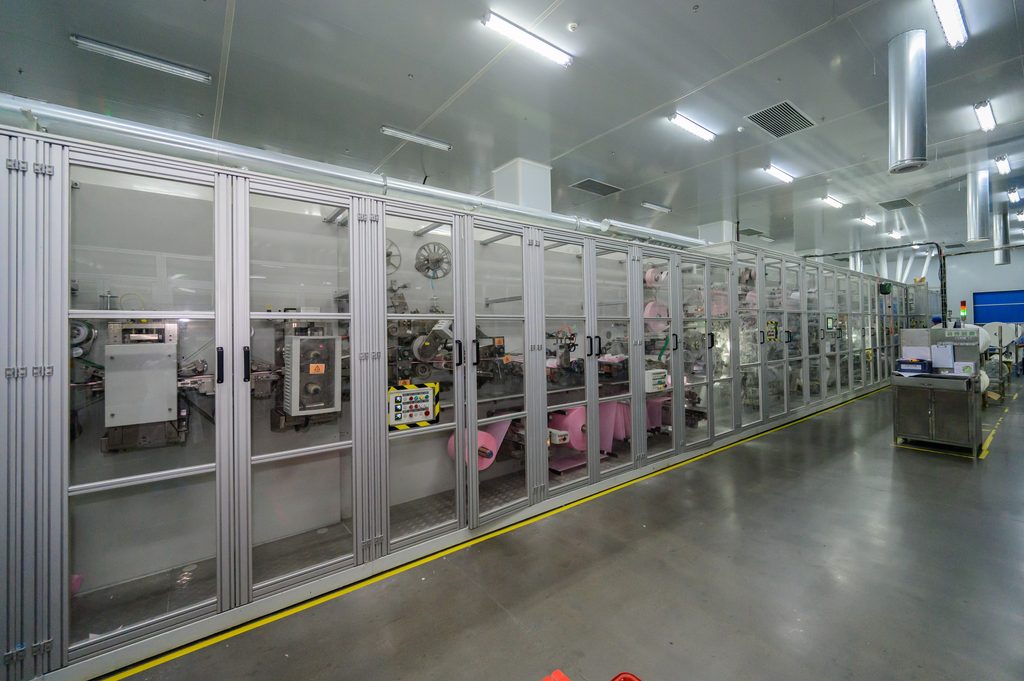
(Dailys Automated Sanitary Pad Production Lines)
Choosing the right OEM/ODM partner can make a significant difference in your product development experience.
At Changzhou Dailys Care Products Co., Ltd., we provide integrated manufacturing and customization support for feminine hygiene and personal care brands worldwide.
Over 20 Years of Industry Experience
With more than two decades of experience in hygiene products, Dailys understands the manufacturing requirements of disposable feminine care products.
Established Manufacturing Infrastructure
Our 35,000 m² facility includes production and office areas supporting product development, manufacturing, quality management, and international business operations.
Automated Production Capabilities
Dailys operates 20 fully automatic production lines for disposable hygiene products, supporting efficient and consistent manufacturing.
R&D and Product Customization
Supported by two R&D centers, we work with customers to develop sanitary pad products based on their target markets and specifications.
Customization options include:
Topsheet and material selection
Absorbent core structures
Product sizes and shapes
Absorbency levels
Wing designs
Functional features
Private label branding
Individual wrappers and retail packaging
Quality-Focused Manufacturing
Our manufacturing operations incorporate sanitation management, raw material handling procedures, environmental controls, and quality inspection processes.
Support for International B2B Customers
We work with feminine care brands, importers, distributors, retailers, private label businesses, and e-commerce brands.
Whether you’re developing your first sanitary pad collection or expanding an existing product range, Dailys can support your OEM/ODM manufacturing project.
Ready to Develop Your Private Label Sanitary Pads?
Partner with Dailys to explore custom sanitary pad materials, absorbency options, product specifications, and private label packaging.
Frequently Asked Questions About Private Label Sanitary Pads
1. How do I start my own sanitary pad brand?
To start your own sanitary pad brand, begin by researching your target market and defining your product positioning. Next, choose your sanitary pad range, find a reliable private label sanitary pads manufacturer, develop product specifications, request samples, design packaging, and confirm manufacturing arrangements.
You should also verify applicable regulatory requirements before selling your products.
2. Can I put my own brand name on sanitary pads?
Yes. Through private label sanitary pads manufacturing, brands can develop sanitary pad products with customized logos, packaging, and other branding elements.
Depending on the manufacturer and project, additional customization may include materials, absorbency, dimensions, and product structures.
3. What is the MOQ for private label sanitary pads?
The minimum order quantity depends on the manufacturer, product specifications, materials, packaging requirements, and customization level.
For an accurate MOQ, contact your sanitary pad manufacturer with your preferred product configuration and estimated order quantity.
4. Can I customize the materials and absorbency of sanitary pads?
Yes. Many OEM/ODM sanitary pad manufacturers support customization of topsheet materials, absorbent core structures, product dimensions, thickness, and absorbency levels.
The available options depend on manufacturing capabilities, material availability, and confirmed project requirements.
5. How long does it take to manufacture private label sanitary pads?
Manufacturing lead times vary depending on product specifications, sample approval, raw material availability, packaging development, order quantity, and production scheduling.
For customized products, allow sufficient time for product development and sample confirmation before mass production.
6. What is the difference between OEM and private label sanitary pads?
OEM refers to manufacturing products according to a customer’s requirements or specifications.
Private labeling refers to selling products manufactured by another company under your own brand.
The two concepts often overlap. A private label sanitary pad project may use OEM or ODM manufacturing services.
7. Can Dailys help develop custom sanitary pads for my brand?
Yes. Dailys provides OEM/ODM sanitary pad manufacturing services, including product development support, material and absorbency customization, sampling, private label branding, packaging, and mass production.
Our team works with customers to develop products based on their target markets and confirmed specifications.
Start Your Private Label Sanitary Pads Project with Dailys
Launching a private label sanitary pads brand requires careful planning, product development, and a dependable manufacturing partner.
By understanding your target market, selecting suitable materials, evaluating samples, and establishing clear production requirements, you can develop a sanitary pad collection that aligns with your brand positioning.
With over 20 years of hygiene manufacturing experience, automated production capabilities, and OEM/ODM product development support, Dailys helps international brands bring customized feminine hygiene products to market.
Whether you’re launching a new private label brand or expanding your existing sanitary pad collection, our team is ready to discuss your project requirements.
Looking for a Private Label Sanitary Pads Manufacturer in China?
Contact Dailys to explore customized sanitary pad solutions for your brand.
[Request a Quote]插入询盘表单按钮
[Explore Sanitary Pads OEM/ODM Solutions]
Frequently Asked Questions
How do I start a private label sanitary pads brand?
Start by researching your target market, selecting sanitary pad types and specifications, and finding a qualified OEM/ODM manufacturer. Request samples, confirm packaging and branding requirements, review applicable regulations, and finalize pricing, MOQ, and production timelines before placing an order.
What is the minimum order quantity for private label sanitary pads?
The minimum order quantity depends on the manufacturer, sanitary pad type, packaging design, customization requirements, and production process. Contact the manufacturer with your product specifications and estimated order volume to obtain an accurate quotation.
Can I customize sanitary pads with my own brand and packaging?
Yes. Private label sanitary pad projects can include customized branding, packaging artwork, product dimensions, absorbency options, and material specifications, depending on the manufacturer's capabilities and minimum order requirements. Confirm available customization options before production.
How do I choose a reliable sanitary pads OEM manufacturer?
Evaluate the manufacturer's production capabilities, quality control procedures, product testing documentation, customization options, export experience, and communication. Request samples and relevant compliance documents, and confirm lead times, MOQ, packaging specifications, and quality requirements before signing a contract.