
What Does a Modern Feminine Hygiene Products Factory Really Look Like?
When B2B buyers visit a feminine hygiene products factory, it is easy to be impressed by fast production lines, large facilities, and neatly stacked finished products.
But these visible elements tell only part of the story.
For feminine care brands, importers, distributors, wholesalers, and retailers, a factory audit should answer a more important question:
Can this manufacturer consistently turn your product requirements into reliable products at commercial scale?
A modern feminine hygiene manufacturer should therefore be evaluated as an integrated manufacturing system—not simply a building filled with machines.
Production capacity, facility management, raw material control, testing capabilities, quality management, R&D, traceability, supply chain stability, OEM/ODM capabilities, and international business support all matter.
This guide explains what professional B2B buyers should examine when visiting or auditing a feminine hygiene products factory, using practical manufacturing scenarios from Dailys to illustrate what these capabilities look like in practice.
Start with the Factory Itself
One of the first things a buyer should verify is whether the supplier actually owns or directly operates the manufacturing facility.
This may sound obvious, but in international sourcing, the company communicating with you is not always the company manufacturing the product.
During a factory audit, verify the facility address, production areas, warehouse areas, testing facilities, quality department, production lines, and business licenses or relevant operational documentation.
The objective is not simply to prove that a factory exists. You want to understand how much of your project the supplier can actually control.
At Dailys, manufacturing operations are based in a 35,000 m² medical-standard production facility and office area. Production, R&D, testing, quality management, and international business teams work within an integrated operational system.
For buyers, this type of integration can make communication between product development and mass production more efficient.
Look at Production Lines, Not Just Production Capacity
“How many pieces can you produce per month?”
This is one of the most common questions buyers ask a sanitary pad factory, but capacity figures alone can be misleading.
A better factory audit examines how that capacity is created.
Look at the number of production lines, automation level, equipment condition, product categories supported, production speed, maintenance procedures, changeover capability, and how critical production parameters are controlled.
Automatic production lines are particularly important for large-volume projects because automation can support efficiency and consistency while reducing unnecessary manual intervention.
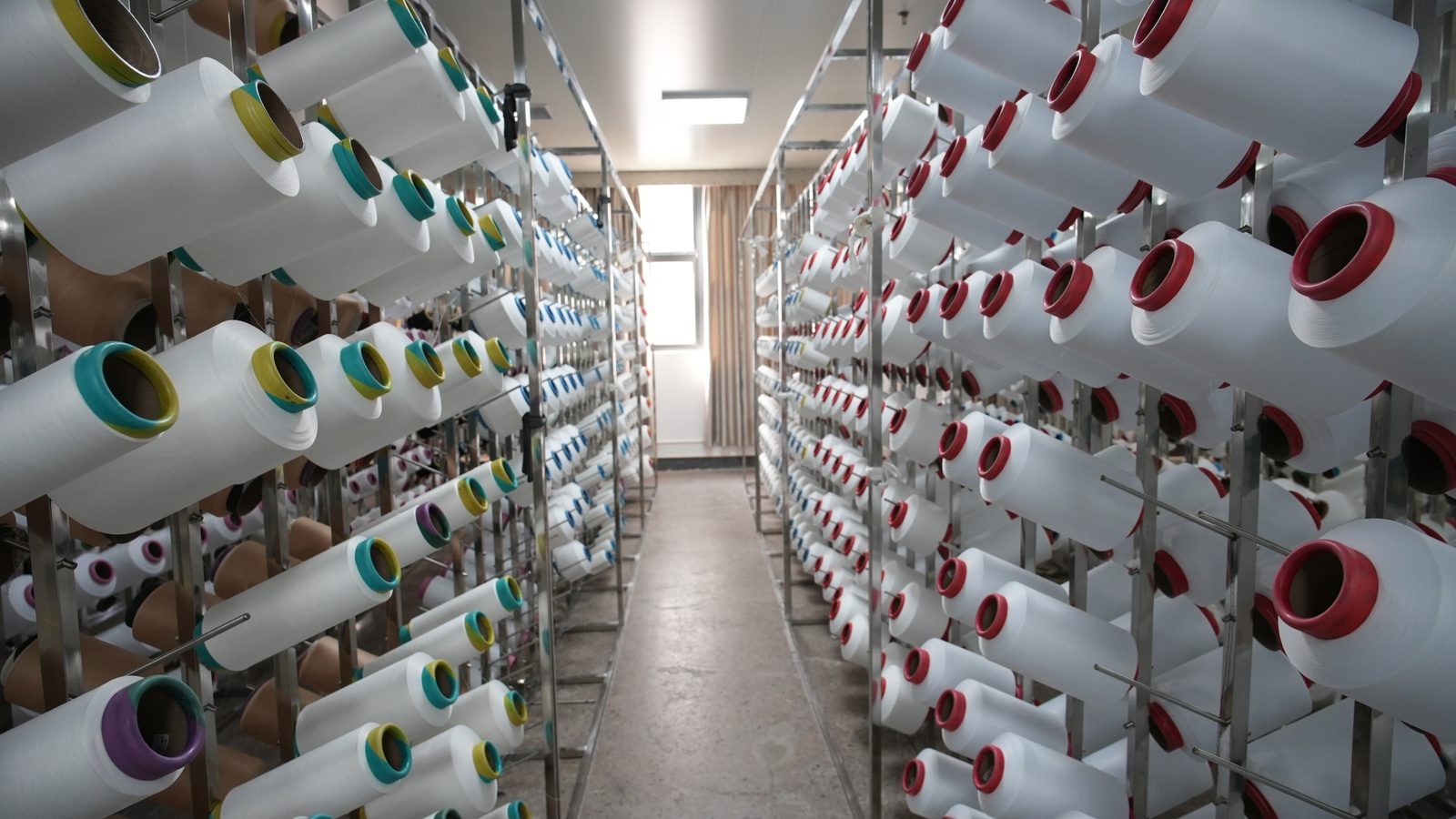
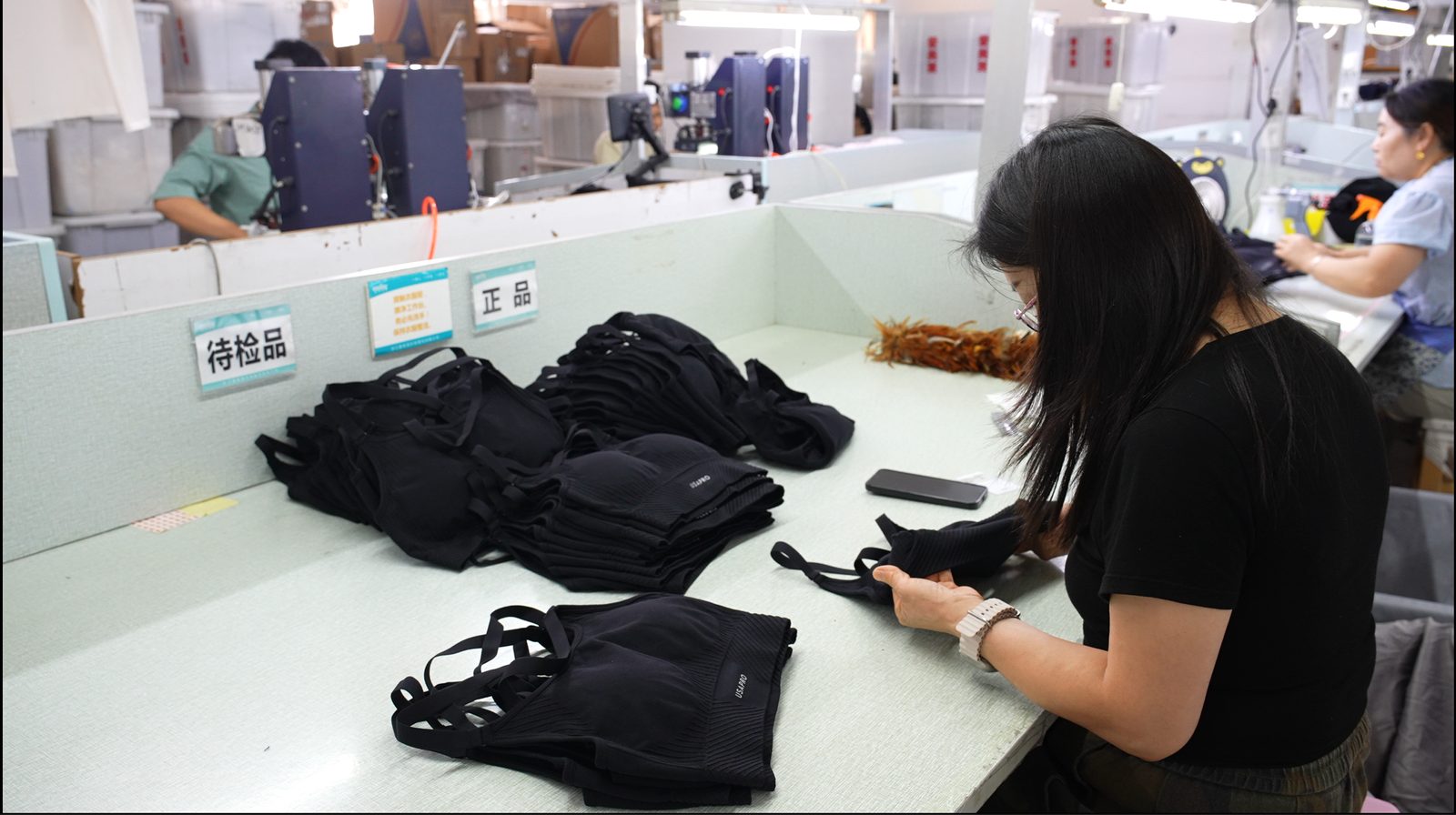
Dailys currently operates 20 fully automatic production lines for disposable hygiene products and 15 fully automatic production lines for textile products.
This combination supports both disposable and textile-based care products and provides manufacturing flexibility for customers building broader feminine, maternal, and personal care portfolios.
During your visit, do not simply take photos of the machines. Ask what each line can produce.
Follow the Raw Materials Before Following the Finished Product
Finished products can look perfect during a scheduled factory visit. Raw material management often reveals more about a factory’s everyday quality discipline.
Sanitary pads are made from multiple materials that may include topsheets, acquisition layers, SAP, fluff pulp or other absorbent structures, backsheets, adhesives, release paper, individual wrappers, and packaging materials.
A professional sanitary napkin factory should have procedures for receiving, identifying, storing, inspecting, and releasing these materials for production.
During an audit, consider checking:
- How incoming materials are identified
- Whether materials are stored appropriately
- How lots or batches are recorded
- Whether key materials undergo incoming inspection
- How approved and non-conforming materials are separated
- How material changes are controlled
- Whether materials can be traced to relevant production batches
For B2B buyers, this is important because consistent finished-product quality begins with consistent raw materials.
Check How Quality Is Controlled During Production
A modern factory should not “manufacture first and inspect later.”
Quality needs to be built into the manufacturing process.
When walking along a production line, ask what operators and quality personnel are monitoring. Depending on the product, this may include product dimensions, weight, material placement, structural integrity, adhesive performance, appearance, packaging, and other defined parameters.
Also ask:
What happens if a parameter falls outside the required range?
A mature quality system should define how abnormalities are identified, isolated, recorded, investigated, corrected, and followed up.
At Dailys, quality control is connected with production and in-house testing. This allows product characteristics to be evaluated at different stages rather than relying exclusively on a final inspection before shipment.
For buyers, this matters because the objective is not to receive one perfect sample. It is to receive consistent production batches over months or years of cooperation.
Visit the Testing Center
After seeing the production floor, one of the most valuable places to visit is the in-house testing center.
A professional feminine hygiene manufacturer needs testing capabilities to understand whether materials and products perform as intended.
For disposable hygiene products, relevant in-house evaluations may include, depending on product type and applicable methods:
- Absorption capacity
- Absorption speed
- Rewet performance
- Fluid distribution
- Weight and dimensions
- Material characteristics
- Adhesive performance
- Product structure and finished-product evaluation
Testing is particularly valuable in OEM/ODM development.
For example, if a buyer wants to compare two absorbent core structures, relying on appearance or hand feel is insufficient. Testing data can provide objective information for product evaluation and optimization.
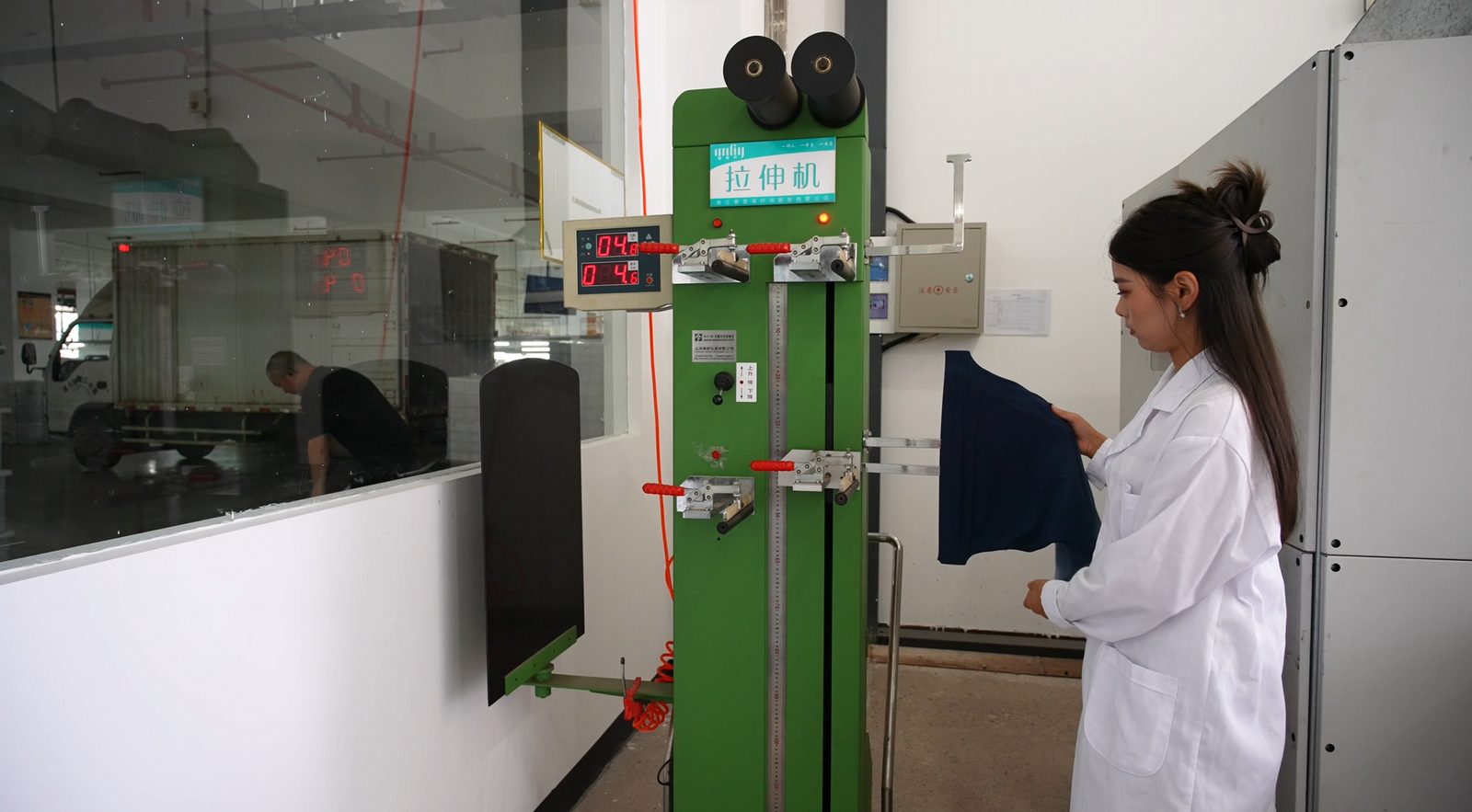
Dailys operates two specialized in-house testing centers: one supporting disposable hygiene products and another supporting textile products.
This enables testing to support both product development and ongoing quality control across different product categories.
A useful audit question is:
“Can you show me how you test this specific product?”
The answer—and the actual testing process—is often more informative than a list of laboratory equipment.
Ask How R&D Works with Manufacturing
Manufacturing capability answers the question, “Can you make it?”
R&D capability answers a different question:
“Can you help us make it better?”
This distinction becomes critical when developing private-label or differentiated feminine care products.
A capable R&D team may support material selection, product structure, absorbent core development, thickness, comfort, performance targets, prototypes, and product optimization.
However, simply having an “R&D department” on an organization chart tells you little.
Ask to see how development actually works.
How does the R&D team communicate with testing and production teams? How are prototypes evaluated? How are test results used to adjust the product? How does a confirmed sample move into mass production?
Dailys is supported by 2 R&D centers, with product development connected to testing and manufacturing.
For OEM/ODM buyers, the value of this structure lies in shortening the path from product idea to manufacturable solution.
Evaluate OEM/ODM Capabilities with a Real Product Brief
Almost every sanitary pad factory can say, “We support OEM.”
The more useful question is: How deep does that customization go?
Instead of asking whether OEM is available, bring an actual product brief to the meeting.
For example:
“We want to develop a 290 mm overnight sanitary pad with specific absorbency, a soft topsheet, customized individual wrapping, 10 pieces per retail pack, and our own branding.”
Then observe how the manufacturer responds.
Do they ask about your target market, positioning, desired performance, materials, packaging, order volume, and target price?
Can they explain which specifications are feasible and how different choices affect performance, MOQ, cost, and lead time?
- Depending on the project, sanitary pad customization may include:
- Product length and shape
- Topsheet
- Absorbent core
- Absorbency level
- Thickness
- Wings
- Individual wrapper
- Pack count
- Retail packaging
- Cartons and shipping specifications
- Branding and artwork
At Dailys, OEM/ODM projects can connect product development, material selection, sampling, testing, automated manufacturing, quality control, and packaging customization.
That integrated process is what buyers should look for—not simply an “OEM available” label.
Check Traceability
Traceability becomes extremely important when something does not go according to plan.
If a customer reports a product issue, can the factory identify when the product was manufactured? Can it determine the production batch, relevant materials, and quality records?
Batch numbers and production records should not exist merely for appearance during an audit. They need to help the manufacturer investigate and respond to real quality issues.
Ask the factory to choose a finished product and demonstrate how it traces backward through its production records.
This is one of the simplest ways to understand whether traceability actually works in practice.
Review Certifications and Compliance Carefully
A wall covered with certificates can be impressive, but B2B buyers should look beyond the number of logos.
Different documents serve different purposes. Product compliance documents, testing reports, management system certifications, social audits, and responsible sourcing standards should not all be treated as the same type of “certificate.”
Ask:
- Who issued the document?
- What company or facility does it cover?
- Which products or materials are included?
- What is its validity period?
- Does it apply to your target market?
- Can the original or verifiable documentation be reviewed?
Depending on the company and project scope, buyers may encounter CE-related requirements, FDA-related regulatory documentation, BSCI audits, OCS, FSC, and other standards or programs.
The key is applicability—not the number of logos displayed on a website.
Look Inside the Warehouse
The warehouse is one of the most informative areas of a factory audit.
Look for how raw materials, packaging, work-in-process items, and finished products are identified and stored.
A well-managed warehouse can provide clues about:
- Inventory control
- Material identification
- Lot management
- First-in/first-out practices where applicable
- Protection from contamination or damage
- Non-conforming material segregation
- Finished-product organization
Also ask how the factory manages safety stock and materials with longer procurement lead times.
This helps you understand the manufacturer’s ability to respond to demand changes and supply chain disruptions.
Understand the Supply Chain Behind the Factory
A feminine hygiene products factory does not manufacture in isolation.
Its ability to deliver depends on upstream suppliers of nonwoven materials, absorbent materials, films, adhesives, release paper, packaging, cartons, and many other components.
Therefore, supplier management is part of manufacturing capability.
Ask how new suppliers are evaluated, how material specifications are approved, how quality issues are managed, and what happens if a key material becomes unavailable.
For customized projects, also identify whether certain materials or printed packaging have higher MOQs or longer lead times.
A strong factory should not promise that supply chain problems will never occur. Instead, it should demonstrate that risks are identified and managed systematically.
Evaluate People as Carefully as Machines
Advanced equipment is important, but machines do not communicate with your brand, understand your target market, develop specifications, manage artwork, coordinate testing, or solve unexpected problems.
People do.
During a factory visit, try to meet representatives from sales, international trade, R&D, quality, production, and—if relevant—packaging or supply chain teams.
For international B2B projects, communication capability can have a significant effect on project efficiency.
Dailys combines manufacturing infrastructure with dedicated R&D centers, testing capabilities, quality teams, and a professional international trade team.
This becomes particularly useful for projects requiring repeated sampling, specification adjustments, customized packaging, documentation, and international shipping coordination.
Ask About Capacity—Then Ask About Lead Time
Large production capacity does not automatically mean short lead times.
Actual delivery depends on available capacity, material preparation, packaging, order complexity, production scheduling, quality verification, and peak-season demand.
Ask for a realistic timeline covering the full project:
Product Brief → Sampling → Sample Approval → Artwork Confirmation → Material & Packaging Preparation → Production → Quality Verification → Shipment
For long-term orders, ask how forecasts and repeat orders can be managed.
A reliable factory should provide realistic expectations rather than simply promising the shortest possible delivery time.
A Practical B2B Factory Audit Checklist
When visiting a feminine hygiene products factory, focus on these areas:
- Manufacturing facility: Is it a real, directly operated factory?
- Production lines: How automated, flexible, and well-maintained are they?
- Capacity: Can it support both current volume and future growth?
- Raw materials: Are materials inspected, identified, stored, and traceable?
- Quality control: Is QC implemented throughout manufacturing?
- Testing: Can relevant performance tests be carried out in-house?
- R&D: Can the manufacturer support product development and optimization?
- OEM/ODM: How deep is the actual customization capability?
- Traceability: Can finished products be traced to production records?
- Compliance: Are relevant documents valid and applicable?
- Warehouse: Are materials and finished goods properly managed?
- Supply chain: How are suppliers and material risks controlled?
- Team: Can departments work together effectively?
- Delivery: Are lead times realistic and repeatable?
What Does This Look Like at Dailys?
Dailys has spent more than 20 years developing its manufacturing capabilities for feminine, maternal, and personal care products.
Today, the manufacturing system includes:
- 35,000 m² — Medical-standard production facility and office area
- 35 automated production lines — 20 fully automatic lines for disposable hygiene products and 15 for textile products
- 2 R&D centers — Supporting product development and optimization
- 2 specialized testing centers — Dedicated capabilities for disposable hygiene and textile product evaluation
- Integrated OEM/ODM support — From material selection and sampling to testing, manufacturing, quality control, packaging customization and international business support
These numbers provide useful context—but they should not be the only reason to choose a manufacturer.
For B2B buyers, what matters is how these resources work together to deliver a consistent product.
That is why a meaningful factory audit should go beyond asking, “How big is your factory?”
The better question is:
“How does your manufacturing system control my product from concept to shipment?”
Final Thoughts: Audit the System, Not Just the Factory
A modern feminine hygiene products factory is more than a large building with high-speed production lines.
For brands, importers, distributors, and retailers, a reliable manufacturing partner should demonstrate control across materials, production, testing, quality, R&D, traceability, customization, supply chain, and delivery.
Machines show you what a factory can produce.
Processes show you how it controls quality.
Testing shows you how it verifies performance.
R&D shows you whether it can help develop better products.
Traceability and supply chain management show you how it responds when something changes or goes wrong.
And the people behind these systems determine how effectively your project moves from an idea to commercial production.
When comparing one sanitary pad factory with another, don’t just ask which factory is bigger or which quotation is lower.
Ask which manufacturing system you would trust with your brand.
Planning a Factory Audit or OEM/ODM Feminine Care Project?
See how Dailys integrates R&D, testing, automated manufacturing, quality control, and OEM/ODM support for feminine care products.
Whether you are sourcing sanitary pads, developing a private-label product, or looking for a long-term feminine hygiene manufacturer, our team is ready to discuss your product and manufacturing requirements.