
Choosing the Right Manufacturer Is More Than Comparing Prices
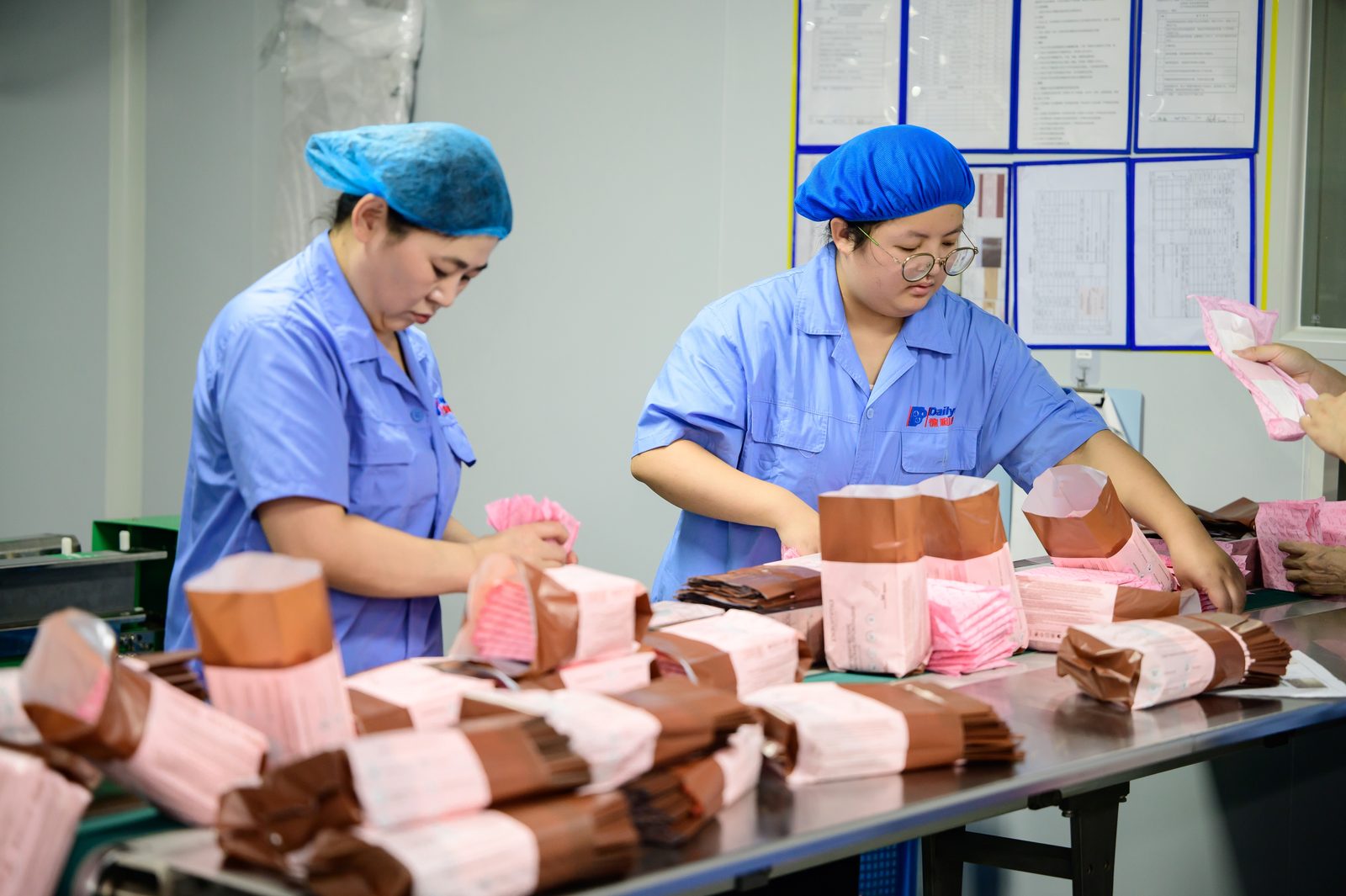
Choosing the right sanitary pad manufacturer is one of the most important decisions for feminine care brands, importers, distributors, wholesalers, and retailers.
A competitive quotation matters, but price alone does not determine whether a supplier can become a reliable long-term partner. Product consistency, manufacturing capacity, testing capabilities, quality control, R&D support, customization, compliance, delivery performance, and supply chain stability can all directly affect your business.
This is especially important for private-label and OEM sanitary pads. A product may look simple from the outside, but its performance depends on multiple materials and structural factors—from the topsheet and acquisition layer to the absorbent core, SAP, fluff pulp, backsheet, adhesives, and packaging.
So, how should a professional B2B buyer evaluate a sanitary pads supplier?
Here are the key factors to consider before making your decision.
Evaluate the Manufacturer’s Factory and Production Capacity
The first step is to determine whether you are working with a genuine manufacturer and whether its production capacity can support your current and future requirements.
A professional sanitary pad factory should be able to clearly explain its production facilities, equipment, number of production lines, product categories, capacity, and manufacturing processes.
For B2B buyers, factory scale is not simply about finding the biggest factory. What matters is whether the manufacturer can provide stable and scalable production.
Consider questions such as:
- Does the supplier operate its own manufacturing facility?
- How many automated production lines are available?
- Can production capacity support your expected order volume?
- Can the factory handle multiple specifications and product structures?
- Does it have sufficient capacity for future business growth?
- How are the production environment and manufacturing processes managed?
If possible, arrange an on-site factory audit or virtual factory tour before committing to a long-term partnership.
Look Beyond Capacity: Check the Production Lines
Two manufacturers may quote similar annual capacities while having very different manufacturing capabilities.
Modern automatic production lines can help improve production efficiency, process control, and product consistency, particularly for high-volume OEM and private-label projects.
When evaluating a sanitary napkin manufacturer, ask what product specifications can be manufactured on each line, what level of automation is used, how production parameters are monitored, and how frequently equipment is maintained.
You should also consider whether the supplier has manufacturing capabilities beyond a single product category. This can be valuable if your brand plans to expand into other feminine, maternal, or personal care products.
Verify In-House Testing Capabilities
One of the most important—and sometimes overlooked—factors when selecting a feminine hygiene manufacturer is testing capability.
Testing should not only happen when a problem occurs. It should support material evaluation, product development, production control, finished-product verification, and continuous improvement.
For sanitary pads, depending on product specifications and applicable test methods, manufacturers may evaluate parameters such as:
- Absorption capacity
- Absorption speed
- Rewet performance
- Fluid distribution
- Product weight and dimensions
- Material characteristics
- Adhesive performance
- Structural integrity
An in-house testing center can also make product development more efficient. When different materials, absorbent core structures, or specifications are being compared, test data can help the manufacturer and customer make more informed decisions.
Ask the supplier which tests can be conducted in-house, which tests require an external laboratory, what methods are used, and whether test records can be provided when required.
Understand the Quality Control System
For B2B buyers, consistent quality between different batches is often more important than the performance of one perfect sample.
A sample can be carefully prepared. Mass production is the real test of a manufacturer’s quality management capabilities.
A reliable sanitary pad manufacturer should implement quality control throughout the manufacturing process rather than relying only on final inspection.
A typical quality control process may include:
Raw Material Inspection → Pre-Production Verification → In-Process Quality Control → Finished Product Inspection → Packaging Inspection → Pre-Shipment Verification
Ask how incoming materials are inspected, how production parameters are monitored, what happens when a non-conforming product is identified, and how quality records are maintained.
A strong QC system helps reduce the risk of batch-to-batch variation, complaints, returns, and supply interruptions.
Check Certifications and Market Compliance
Different countries and markets may have different requirements for feminine hygiene products, materials, packaging, labeling, documentation, and responsible sourcing.
Therefore, instead of simply asking, “What certificates do you have?” ask:
“Which certifications and compliance documents apply to my specific product and target market?”
Review relevant product documentation, test reports, management systems, social compliance audits, and responsible sourcing credentials where applicable.
For example, depending on the manufacturer, materials, products, and project scope, you may encounter CE-related requirements, FDA-related regulatory requirements, BSCI audits, OCS, FSC, or other standards and documentation.
It is important to verify the actual scope, validity, and applicability of each document rather than treating every certification or audit as equivalent.
Evaluate R&D Capability, Not Just Manufacturing
If your goal is to build a differentiated product instead of purchasing a standard specification, R&D capabilities become especially important.
A capable R&D team can support decisions around:
- Product structure
- Absorbent core design
- Material selection
- Size and thickness
- Absorbency requirements
- Comfort and surface feel
- Packaging specifications
- Product performance optimization
For OEM/ODM projects, R&D and testing should ideally work together.
Rather than simply asking a manufacturer to “make a thinner pad” or “increase absorbency,” buyers can work with the manufacturer to compare different product structures and use testing data to evaluate the results.
This turns the manufacturer from a production contractor into a product development partner.
Assess OEM/ODM and Customization Capabilities
Private-label buyers rarely have exactly the same requirements.
Before choosing an OEM sanitary pad manufacturer, determine which elements can actually be customized.
Depending on manufacturing capabilities and order requirements, customization may involve:
- Product length and size
- Absorbency level
- Topsheet materials
- Absorbent core structure
- Wings and product shape
- Individual wrapping
- Inner and outer packaging
- Brand logo and visual design
- Pack count
- Carton specifications
Also ask about MOQ, sampling costs, sample lead time, tooling or printing requirements, packaging MOQ, and mass-production lead time.
A professional OEM supplier should clearly explain which options are technically feasible and which requirements may increase cost or lead time.
Check Lead Times and Delivery Reliability
The lowest unit price becomes meaningless if products repeatedly arrive late.
Before confirming a sanitary pads supplier, understand the entire order timeline rather than asking only for the production time.
A project may involve:
Product Confirmation → Sampling → Sample Approval → Packaging Design → Packaging Production → Material Preparation → Mass Production → Inspection → Shipment
For custom products, packaging and raw material preparation may significantly affect the overall lead time.
Ask the manufacturer how production schedules are planned, how peak seasons are handled, and how delays are communicated.
For recurring orders, forecast sharing can also help both parties plan materials and production capacity more effectively.
Evaluate Supply Chain Stability
A sanitary pad manufacturer depends on a network of raw material and packaging suppliers.
Nonwoven fabrics, SAP, fluff pulp, films, adhesives, release paper, individual wrappers, bags, cartons, and other materials all need to be available at the right specification and at the right time.
A supplier with mature supply chain management can better handle material fluctuations, urgent requirements, and order growth.
B2B buyers should consider:
- Does the manufacturer have stable material suppliers?
- How are incoming materials approved and inspected?
- Are key materials traceable?
- How are material changes controlled?
- Are alternative materials evaluated before substitution?
- How does the factory manage critical material shortages?
Supply chain management becomes increasingly important as your order volume grows.
Request Samples Before Placing a Bulk Order
Never evaluate a sanitary napkin manufacturer based only on a quotation and product catalog.
Request samples and compare them systematically.
Depending on your product positioning, consider evaluating dimensions, thickness, surface feel, absorbency, absorption speed, rewet performance, fit, adhesive performance, packaging quality, and overall user experience.
For custom products, an initial sample does not necessarily represent the final product. Multiple rounds of sampling and optimization may be necessary before the specification is finalized.
Most importantly, establish a clearly approved product specification before mass production.
The goal is not simply to find a sample you like. It is to create a measurable standard that both buyer and manufacturer can follow during future production.
A Practical Sanitary Pad Manufacturer Checklist
Before selecting a supplier, check these 10 areas:
- Factory: Does the supplier have verifiable manufacturing facilities?
- Capacity: Can it support both current orders and future growth?
- Testing: Does it have relevant in-house testing capabilities?
- Quality: Is QC implemented throughout the manufacturing process?
- Compliance: Can applicable documents be provided for your target market?
- R&D: Can the team support product development and optimization?
- OEM/ODM: What specifications, materials, and packaging can be customized?
- Samples: Is there a structured sampling and approval process?
- Delivery: Are lead times realistic and production schedules reliable?
- Supply Chain: Are key raw materials stable and appropriately controlled?
Don’t choose solely based on who offers the lowest price. Compare the total capability and supply risk behind the quotation.
Why Work with Dailys?
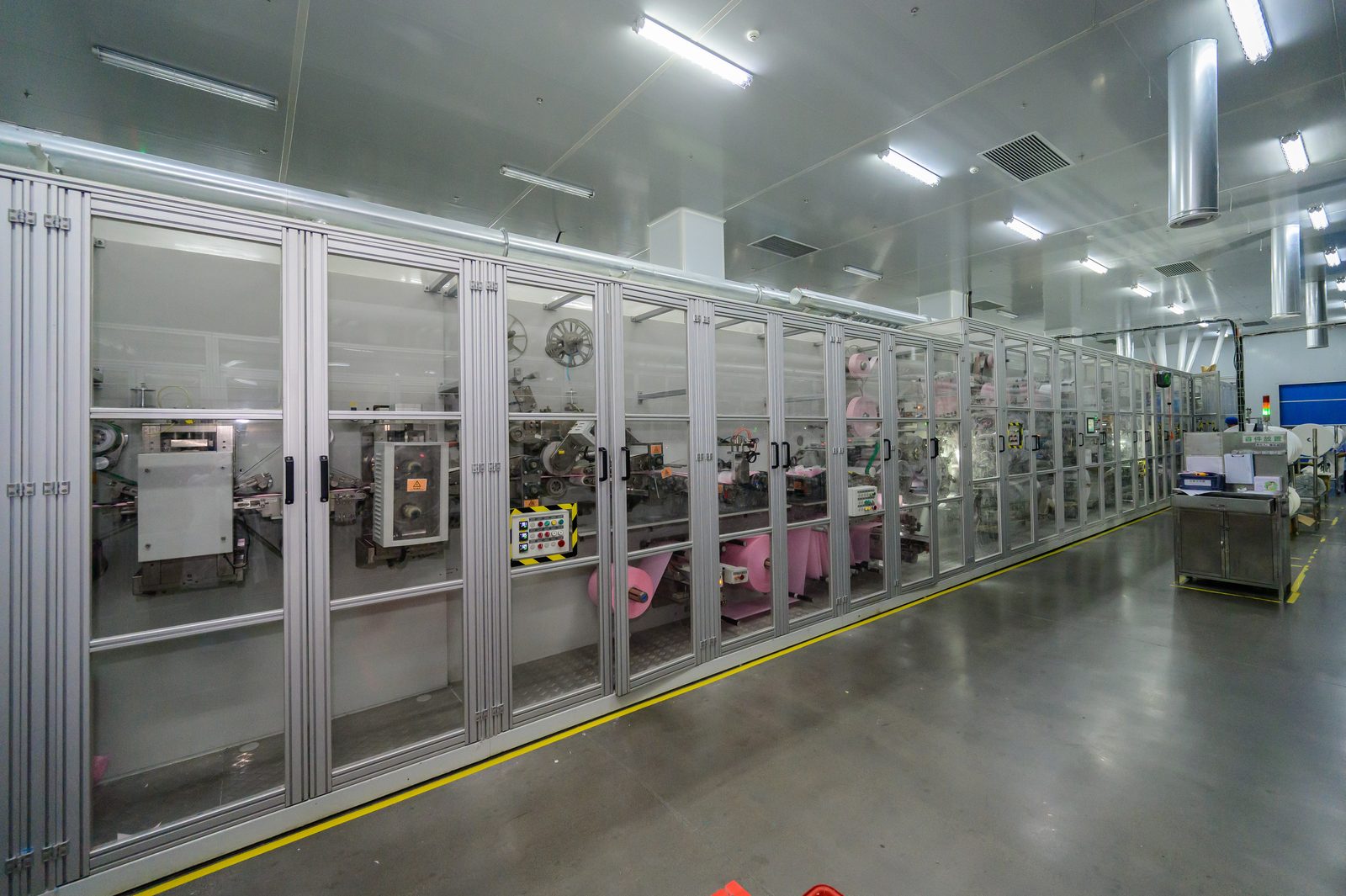
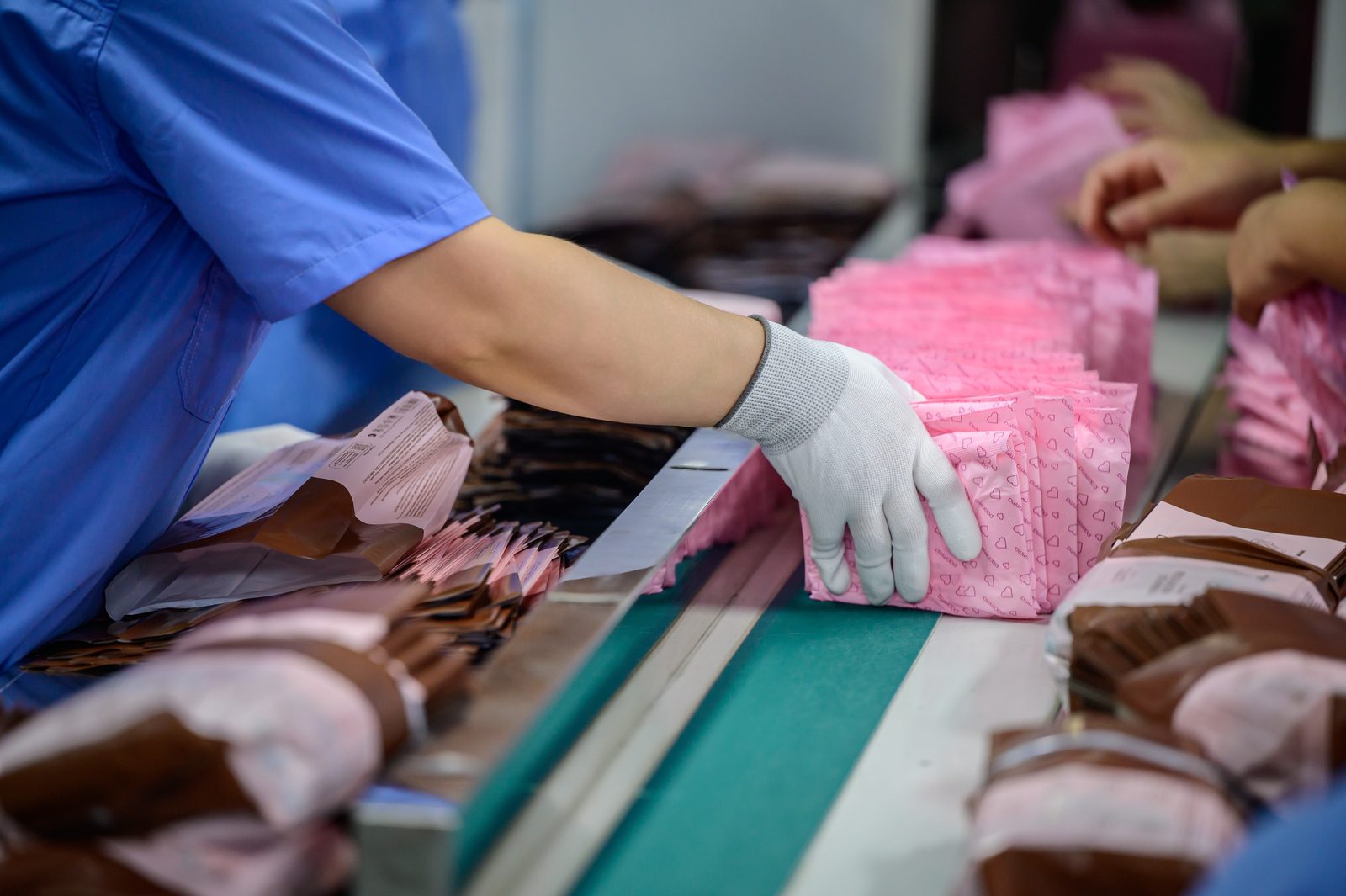
Changzhou Dailys Care Products Co., Ltd. is a professional hygiene products manufacturer in China with more than 20 years of industry experience, serving customers in feminine, maternal, and personal care markets.
Our integrated capabilities bring product development, testing, manufacturing, quality control, and OEM/ODM customization together under one manufacturing system.
Dailys currently operates:
35,000 m² medical-standard production facility and office area
20 fully automatic production lines for disposable hygiene products
15 fully automatic production lines for textile products
2 R&D centers
2 specialized in-house testing centers for disposable hygiene and textile products
Professional international trade and OEM/ODM support
For OEM/ODM customers, our teams can work together across material selection, product development, sampling, testing, manufacturing, quality control, packaging customization, and export support.
Our goal is not simply to manufacture a product according to an order. We aim to help customers build reliable feminine care products that are ready for their target markets.
Final Thoughts
A reliable sanitary pad manufacturer should offer more than competitive pricing.
Manufacturing capacity determines whether your orders can scale. Testing and quality control affect product consistency. R&D and OEM capabilities determine how effectively your ideas can be turned into products. Compliance, lead-time management, and supply chain stability influence whether those products can reach the market reliably.
For B2B buyers, the best supplier is ultimately not necessarily the one with the lowest quotation—it is the one capable of delivering the right product, at consistent quality, in the required quantity, and at the agreed time.
Taking the time to evaluate these capabilities before placing your first bulk order can reduce risk and lay the foundation for a more stable long-term partnership.